
If you have rows or full arches of missing teeth, call us for dentures. Reliance Dental Family Dentistry provides comprehensive care for replacing missing teeth. We offer traditional dentures and more advanced treatment with implant-supported dentures in Edmonton, AB. With the help of restorative dentistry, we can address tooth loss effectively while improving oral function and aesthetics.
Dr. Ranveer Chandy and Dr. Adam Manfrin handle denture cases at our South Edmonton office. Dr. Manfrin completed a hospital-based residency at Tufts University in Boston. He has extensive experience with dentures and prosthetics from his work in remote Indigenous communities. Dr. Chandy has experience in implant dentistry for patients who want fixed implant dentures.
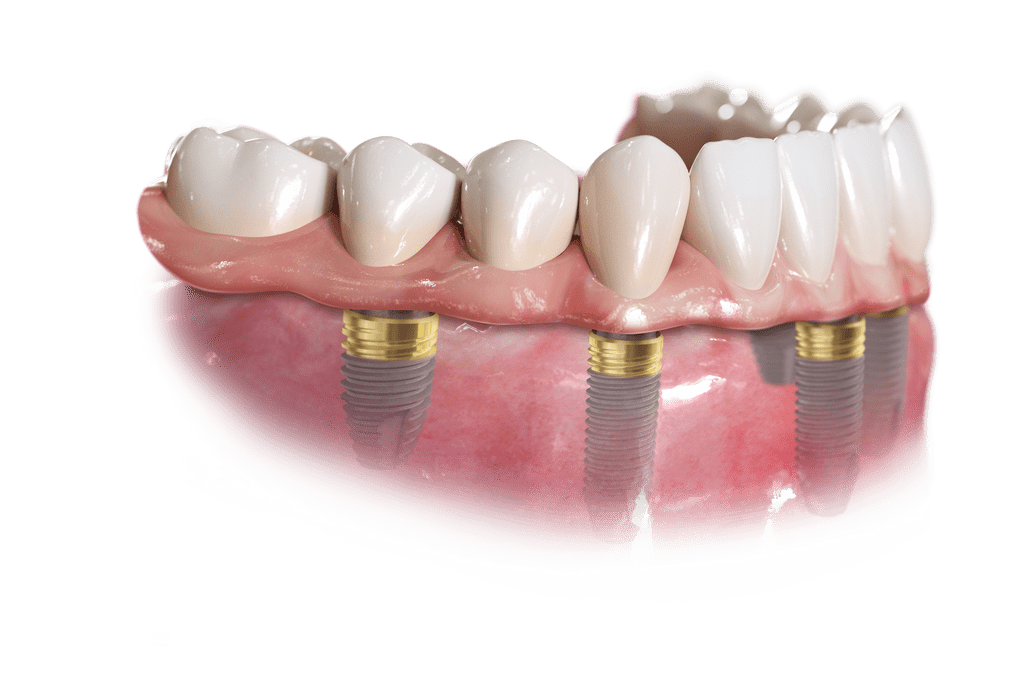
Types of Dentures in Edmonton, AB
Every patient has different needs and a different number of missing teeth. The type of denture you need will depend on your budget, oral health, and number of missing teeth. Dr. Chandy will review your options with you in depth at your consultation:
- Fixed Dentures: Full dentures replace all of the teeth in the upper or lower jaw, or both. They rest on the gums and are held in place by suction, adhesives, or dental implants. Full dentures are a good option for people who have lost all of their teeth due to aging, gum disease, or injury. They restore the ability to eat, speak, and smile confidently.
- Complete Dentures: Complete dentures replace all of the teeth in the upper or lower jaw, or sometimes both. We recommend complete dentures when most or all natural teeth are missing.
- Partial Dentures: We recommend partial dentures when some natural teeth are still present. They fill in the gaps left by missing teeth and are held in place with metal clasps or attachments that connect to your natural teeth. Partial dentures help keep the remaining teeth from shifting and make chewing and speaking easier.
- Hybrid Partial Dentures: Hybrid partial dentures combine features of both traditional partials and implant-supported dentures. They are more stable than regular partials but less permanent than fully fixed dentures.
Who Is a Candidate for Dentures?
Most adults missing several or all of their teeth are denture candidates in our Edmonton, Alberta office. The best type depends on three things:
- Your gum health: Active gum disease needs treatment first, because it can cause a denture to fit poorly and lead to more bone loss.
- Your bone density: Traditional dentures rest on your gums, so bone density matters less. Implant-supported dentures need enough bone to anchor into. If you’ve lost bone, a graft can rebuild it.
- Your overall health: Implant placement is a minor surgical procedure, so patients need to be in reasonably good health. Dr. Chandy or Dr. Manfrin will review your medical history and let you know which option fits.
If you’re not a candidate for implants, traditional dentures are still a strong option. They restore function and appearance and have improved significantly in recent years.
The Top Benefits of Implant Dentures
Reliance Dental provides all types of dentures, including implant dentures. We recommend this type of denture to all patients who are candidates because of the many benefits for oral health and lifestyle. Implant-supported dentures offer several advantages over traditional dentures.
Enhanced Stability
Implant-supported dentures are anchored directly to your jawbone, so they do not slip or shift. Traditional dentures rest on your gums and can move when you eat or talk. With implants, you can chew, speak, and laugh with complete confidence.
Improved Comfort
Because implant dentures attach to implants rather than sitting on your gums, they feel more natural and comfortable. Traditional dentures often cause sore spots or irritation from rubbing. With implants, there is no need for messy adhesives, and you will not experience the discomfort of dentures moving around in your mouth.
Preservation of Jawbone
When you lose teeth, your jawbone begins to shrink because it no longer has tooth roots to stimulate it. This bone loss can change the shape of your face and make you look older. Dental implants act like artificial roots, keeping your jawbone strong and healthy.
Increased Function
Implant-supported dentures give you a strong, stable bite, so you can eat a wider variety of foods. You can enjoy meats, crunchy vegetables, and other tough foods without struggling. Unlike traditional dentures, you do not have to limit your diet or avoid your favorite meals.
Long-Term Solution
Traditional dentures may need adjustments or replacements every few years. Implant-supported dentures are designed to last for many years with proper care. They are a smart investment in your oral health because the implants integrate with your jawbone, creating a strong and durable foundation.
Natural Look
Implant dentures are custom-made to match the natural shape of your face and jaw. Because they prevent jawbone loss, they help maintain your facial structure and reduce the sunken look that often happens with missing teeth. A full, confident smile can make a big difference in how you look and feel.
Easy Care
Caring for implant-supported dentures is simple and similar to caring for natural teeth. You brush, floss, and visit your dentist regularly, just like before. Unlike removable dentures, there is no need for soaking or special adhesives.
The Denture Process at Reliance Dental
Dr. Chandy and Dr. Manfrin work with local denture labs to create your custom appliance. If implants are part of your treatment, they place those themselves in our office. The process looks different depending on whether you’re getting traditional or implant-supported dentures.
Traditional Dentures: What to Expect
- Consultation and evaluation. Your first visit is a conversation about your goals and an exam of your gums, remaining teeth, and jawbone. We take digital X-rays and 3D scans to check for decay, gum disease, and bone loss. If you need extractions before your denture, we plan those into your timeline.
- Digital impressions. We use a handheld scanner to capture a precise 3D model of your mouth. Digital impressions replace the messy trays you might remember from past dental visits, and they give the lab exact measurements for a better-fitting denture.
- Denture fabrication. Our lab uses the digital scan and Dr. Chandy or Dr. Manfrin’s specifications to create your custom denture. Most traditional dentures take a few weeks to complete.
- Fitting and adjustments. When your denture arrives, we check the fit, bite, and appearance. You’ll try it in the office, and we make adjustments before you leave. Follow-up visits catch sore spots and small fit issues as your mouth adjusts.
Implant-Supported Dentures: What to Expect
- Consultation and evaluation. The first visit covers the same exam and imaging as a traditional denture consultation, plus a closer look at your bone density. Digital X-rays and 3D scans help us measure bone volume and plan implant positions. If you’ve lost bone, a graft can rebuild the site before placement.
- Implant placement. Our oral surgeon places the titanium implants into your jawbone during a minor surgical visit. Your mouth is numbed, and sedation options are available if you feel anxious. Our dentists are trained in nitrous oxide and oral conscious sedation.
- Healing. Your jawbone fuses with the implants over three to six months, a process called osseointegration. You’ll wear a temporary denture during this time so you’re never without teeth. Most patients continue working and their normal routines while they heal.
- Abutment placement. Once your implants are stable, we attach small connectors called abutments. Some implant dentures snap onto the abutments and come out for cleaning, while others are permanently fixed in place. Dr. Chandy or Dr. Manfrin will recommend the option that fits your case.
- Digital impressions and fabrication. We take digital impressions of your mouth and send them to the lab with specifications for shade, shape, and fit. The lab creates your custom denture, and we check it against the digital model before your fitting.
- Fitting and adjustments. When your denture is ready, we check the fit, bite, and appearance. You’ll try it in the office, and we make adjustments before you leave. Follow-up visits confirm the denture stays secure and your bite stays balanced.
Book your denture consultation. Call 587-840-9984.
Patient Review
Dentures FAQs
Do you want to know more about how you can replace missing teeth? We can help. Read answers to common questions about dentures in Edmonton, AB.
How long will it take to get my dentures?
Traditional dentures take a few weeks. Implant-supported dentures take a few months because your jaw needs time to heal. Our dentists will give you a personal timeline based on
Do implant dentures feel natural?
Yes. Implant dentures are securely anchored to your jaw, so they do not slip or move. They feel much more natural than traditional dentures.
Do my dentures need to be realigned over time?
Your mouth and gums can change shape over time. Implant-supported dentures are more stable than regular dentures, so they usually need fewer adjustments.
How do dentures change my face shape?
When you lose teeth, your jawbone can shrink, making your face look sunken. Dentures fill in the gaps and support your lips and cheeks, giving you a fuller, more natural appearance.
Will implant dentures affect my speech?
You may notice a slight change at first as your mouth adjusts. Most patients adapt quickly by practicing speaking or reading aloud. Because implant dentures are secure, they do not slip or shift.
Are there foods I should avoid with dentures?
Start with soft foods like mashed potatoes, eggs, and cooked vegetables. Avoid sticky or hard foods until you feel comfortable. Implant-supported dentures allow you to eat most foods.
Restore All Your Missing Teeth
Get custom dentures in Edmonton, AB, at Reliance Dental Family Dentistry. Call us in South Edmonton at 587-840-9984 or request an appointment with us online. Let us know if you have more questions, and we’ll be happy to help. Serving Summerside, Walker Lakes, Ellerslie, and South Edmonton.