
Losing a tooth can feel like a big deal. Whether it happened suddenly or after a long battle with decay, you’re left with a gap that affects more than just your smile. It can make chewing awkward, shift your other teeth out of place, and even change the shape of your face over time. But you have options. Two of the most common restorative dental treatments and effective ways to replace a missing tooth in Edmonton are dental bridges and dental implants.
Both work well, but they’re very different solutions. So how do you know which one is right for you? At Reliance Dental Family Dentistry, we’re going to review dental bridges vs. dental implants in our Edmonton dental office so you can find the right restorative option for you.
What Is a Dental Bridge?
A dental bridge literally “bridges the gap” created by a missing tooth.
A traditional bridge uses the two healthy teeth on either side of the gap as anchors. We shave down those anchor teeth slightly and place crowns on them. Then we attach a false tooth, or teeth, in between. The whole thing is cemented into place and becomes a single, fixed unit.
The upside: A bridge is usually faster. The whole process typically takes just a couple of visits over a few weeks. It is also generally more affordable upfront than an implant.
The downside: Those anchor teeth have to be filed down, even if they are perfectly healthy. Bridges do not replace the tooth root, so the jawbone underneath the gap can gradually shrink over time. Bridges also do not last as long as implants. You will likely need to replace one every 10 to 15 years.
What Is a Dental Implant?
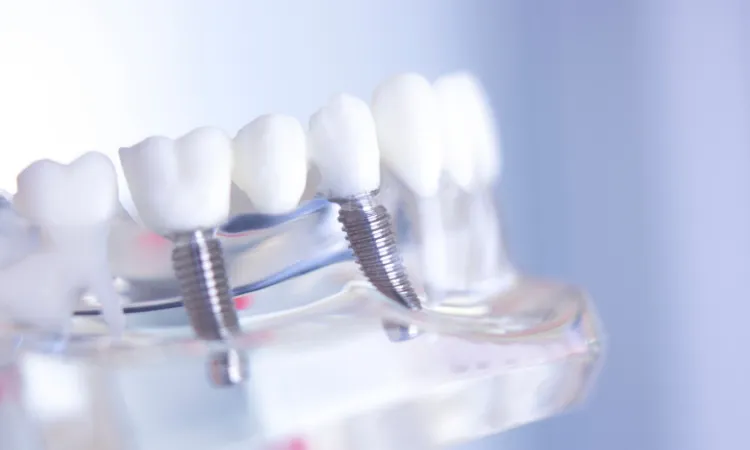
An implant is a different approach. Instead of relying on neighboring teeth, an implant replaces the missing tooth all the way from the root up.
The process starts with a small titanium post. A local oral surgeon surgically places this post into your jawbone where the missing tooth used to be. Over a few months, the bone grows around this post and fuses with it. Once that fusion is complete, we attach a custom-made crown on top.
The upside: Implants are incredibly durable and natural-feeling. They are the closest thing to having your real tooth back. You clean them just like a natural tooth. They stimulate the jawbone, which keeps it healthy and strong. With proper care, an implant can last a lifetime.
The downside: Implant treatment takes several months from start to finish. Tooth implants are also a bigger investment upfront, though many patients find the long-term value makes up for it.
The Long-Term Cost Comparison
A traditional bridge may cost less initially, but it will need to be replaced every 10 to 15 years. That means additional costs over time. Each replacement may also require more work on the supporting teeth.
An implant costs more upfront but can last a lifetime. Over 20 or 30 years, an implant often proves to be the more cost-effective option.
How Bridges and Implants Affect Your Jawbone
One of the most important differences between bridges and implants is the effect on your jawbone.
When you lose a tooth, the bone underneath starts to shrink. This happens because the tooth root is no longer there to stimulate the bone. Over time, bone loss can change the shape of your face. It can make you look older.
A bridge does nothing to prevent bone loss. It sits on top of the gums and relies on neighboring teeth for support while the bone underneath continues to shrink.
An implant replaces the tooth root. It stimulates the bone just like a natural tooth. This prevents bone loss and preserves your facial structure. If preserving your jawbone is important to you, an implant is the better choice.
The Impact on Healthy Teeth
A bridge requires filing down the teeth on either side of the gap. These teeth are permanently altered. They will always need crowns, which can weaken them over time.
An implant stands on its own. Your neighboring teeth stay untouched, healthy, and strong. If you have healthy teeth adjacent to the gap, an implant may be the better option.
So, Which One Should You Choose?
At Reliance Dental, we don’t believe in a one-size-fits-all answer. The right choice depends on your unique situation, and we’re honest about what we recommend.
A traditional bridge might be a great fit if you want a faster, more budget-friendly solution and the teeth on either side of the gap already need crowns. An implant might be the better choice if you want the longest-lasting, most natural result and you’re willing to invest the time and money upfront.
Your overall health matters too. Implants require healthy gums and enough jawbone to support the post. If you’re a smoker, have diabetes, or other conditions that slow healing, a bridge might be a safer bet.
We’ll Help You Find the Best Restoration for You
We know this can feel like a big decision. That’s why our team takes the time to explain everything, answer your questions, and honestly lay out the pros and cons of each option. We follow the Alberta Dental Fee Guide, direct bill to insurance, and offer payment plans for larger procedures. So you can make the choice that’s right for you and your budget, without feeling pressured either way.
If you’ve been living with a missing tooth and wondering what to do about it, give us a call. We’ll take a look, talk through your options, and help you figure out the best path forward for your smile.